Ukrainian Historical Institutions in Interwar Poland: the Attempt to Generalise
Authors
Files
Key Information
Journal
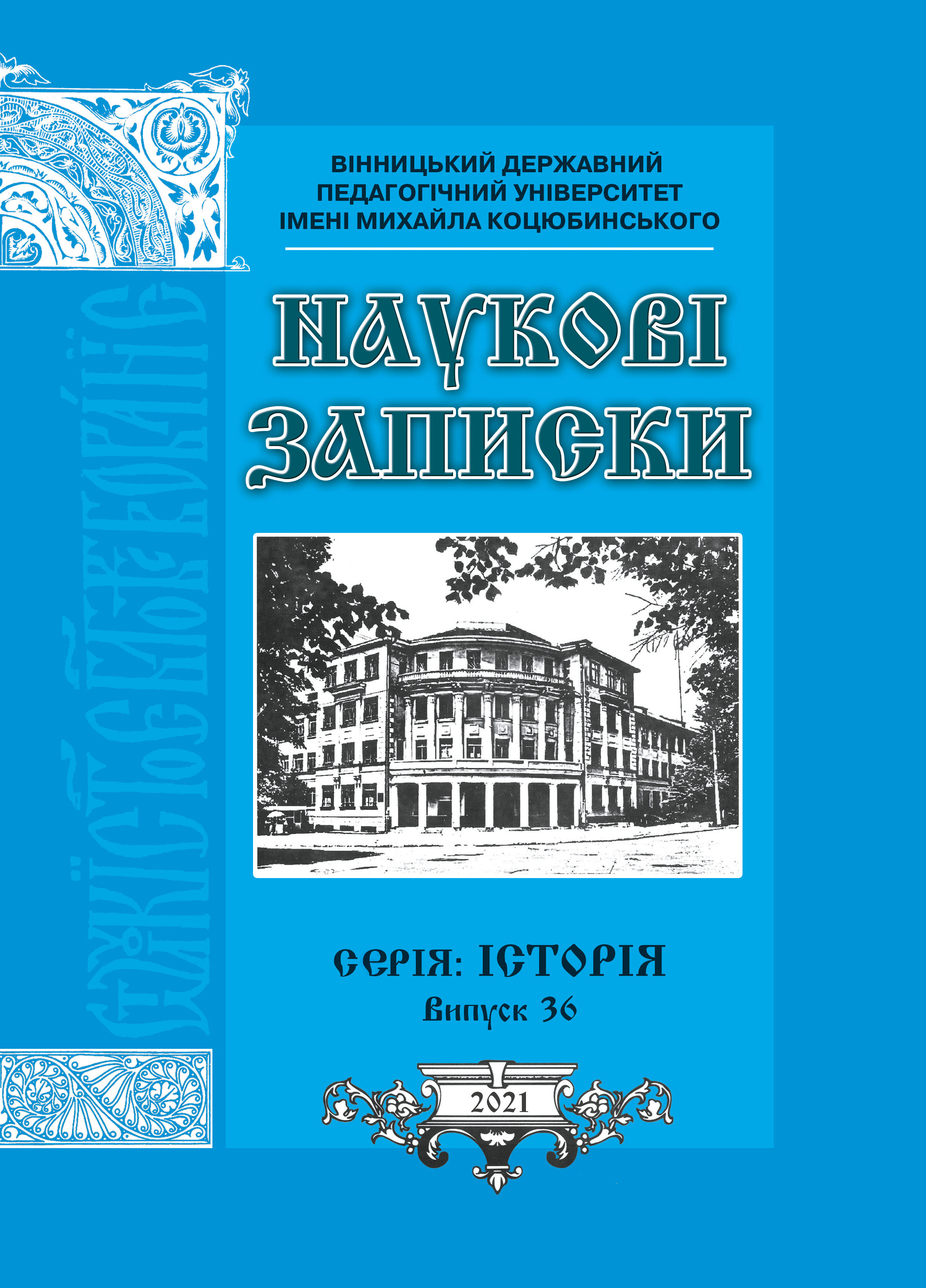
Published in No. 36 (2021) of Scientific Papers of the Vinnytsia Mykhailo Kotsyiubynskyi State Pedagogical University Series History.
The journal covers current problems of history of Ukraine, World history, historical local history, ethnology, historiography, source studies, theories and methodologies of history, the most modern monographic works in the field of historical sciences are reviewed.
The publication is designed for scientists, ethnographers, teachers, postgraduates, students, everyone who seek to get a solid knowledge of the theoretical and applied nature of history.
By the decision of the Ministry of Education and Science of Ukraine this journal is included in the list of scientific professional editions (category B) in which the results of dissertations on historical sciences can be published. (Order of the Ministry of Education and Science of Ukraine No.409 dated 17/03/2020).
About the JournalAbstract
References
##plugins.themes.default.displayStats.downloads##
Details
License
Copyright (c) 2021 Scientific Papers of the Vinnytsia Mykhailo Kotsiubynskyi State Pedagogical University. Series: History

This work is licensed under a Creative Commons Attribution 4.0 International License.