Принцип відокремлення церкви від держави «по-радянські»: на основі аналізу цілком таємних документів ДПУ та КП(б)У
Автор(и)
Файли
##plugins.themes.individualizeTheme.highlightedArticleDetails##
Журнал
##plugins.themes.individualizeTheme.publishedInIssue##
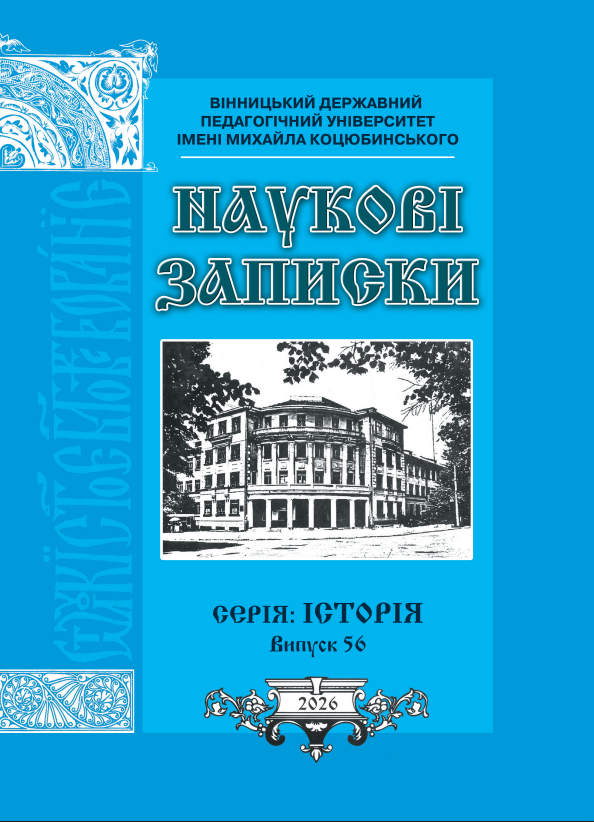
В журналі висвітлюються актуальні проблеми історії України, всесвітньої історії, історичного краєзнавства, етнології, історіографії, джерелознавства, теорії та методології історії, рецензуються найсучасніші монографічні праці в галузі історичних наук. Видання розраховане на науковців, краєзнавців, викладачів, аспірантів, студентів, усіх, хто прагне отримати ґрунтовні знання теоретичного і прикладного характеру з історії.
Рішенням Міністерства освіти і науки України збірник включено до Переліку наукових фахових видань (категорія Б), в яких можуть публікуватися результати дисертаційних робіт з історичних наук. (Наказ МОН України №409 від 17.03.2020 р.).
Про журналАнотація
Посилання
Babii, M. (2004). State policy on freedom of conscience and religion: Essence and practice. Human and the World, (3), 16–19. [in Ukrainian].
Bilokin, S. (2013). Mass terror as a means of state governance in the USSR (1917–1941): A source-based study (Vol. 2). Drohobych: Kolo. [in Ukrainian].
Bulletin of the NKVD of the Ukrainian SSR. (1923a). No. 21. [in Russian].
Bulletin of the NKVD of the Ukrainian SSR. (1923b). No. 24. [in Russian].
CA FSB - Central Archive of the FSB of the Russian Federation. (1925/1997). Materials on church policy issues (Fond 1, Inventory 4, File 372, Sheets 115-117). In N. N. Pokrovsky & S. G. Petrov (Comp.), Archives of the Kremlin: The Politburo and the Church, 1922–1925 (Book 2). Novosibirsk: Sibirskii Khronograf; Moscow: ROSSPEN. [in Russian].
Confessional policy of the Soviet state, 1917–1991: Documents and materials (Vols. 1–6). (2017). Moscow: Political Encyclopedia. Decrees of Soviet power (Vol. 1: October 25, 1917 – March 16, 1918). (1957). Moscow: Politizdat. [in Russian].
DAHO - State Archive of Kharkiv Oblast.
Decrees (1957). Decrees of Soviet Power (Vol. 1: October 25, 1917 – March 16, 1918). Moscow: Politizdat.
Gidulianov, P. (1926). Separation of church and state in the USSR: A complete collection of decrees, departmental regulations, and rulings of the Supreme Court of the RSFSR and other Soviet socialist republics. Moscow: Legal Publishing House of the People's Commissariat of Justice of the RSFSR. [in Russian].
HAD SBU - Sectoral State Archive of the Security Service of Ukraine.
Hrushova, T. (2000). The Soviet state and the Pentecostal movement in Ukraine (1920–1991) (Unpublished PhD dissertation). Zaporizhzhia State University, Ukraine. [in Ukrainian].
Ihnatusha, O. (2006). Institutional schism of the Orthodox Church in Ukraine under conditions of modernization (19th century–1930s) (Doctoral dissertation). Zaporizhzhia National University, Ukraine. [in Ukrainian].
Izvestia. (1918, August 30). No. 186 (450). [in Russian].
Izvestia. (1923, August 12). No. 180 (1917). [in Russian].
Korotaiev, O. (2025). The church in the fire of the "Great Terror" of 1937–1938. Occasional Papers on Religion in Eastern Europe, 45(7), Article 4. https://doi.org/10.55221/2693-2229.2646.
Kyrydon, A. (2006). State-church relations in Soviet Ukraine (1917–1930s) (Doctoral dissertation). Taras Shevchenko National University of Kyiv, Ukraine. [in Ukrainian].
Lenin, V. (1970). Collected works (Vol. 12). Moscow: State Publishing House of Political Literature. [in Russian].
Odintsov, M., & Kochetova, A. (2014). Confessional policy in the Soviet Union during the Great Patriotic War, 1941–1945. Moscow: Scientific and Political Book; Political Encyclopedia. [in Russian].
Olitskyi, V. (2025). Agent-operational activities of Soviet special services in the monastic community of the Hlynska Pustyn (mid-1950s). Scientific Papers of the Vinnytsia Mykhailo Kotsyiubynskyi State Pedagogical University. Series History, (54), 155–160. https://doi.org/10.31652/2411-2143-2025-54-155-160.
Pashchenko, V. (1994). Freedom of conscience in Ukraine: Myths and facts of the 1920s–1930s. Kyiv. [in Ukrainian].
State Archive of the Security Service of Ukraine in Odesa Region.
The Church must remain the Church: The irreversible decades (1917–1937). (2008). Moscow: International Council of Evangelical Christians-Baptists. [in Russian].
Trygub, O. (2021). Agent-operational activities of Soviet security services in a Protestant environment (1945-1953). Occasional Papers on Religion in Eastern Europe, 41(4), Article 7. https://doi.org/10.55221/2693-2148.2291.
TsDAHOU - Central State Archive of Public Associations and Ukrainica.
TsDAVOU – Central State Archive of Supreme Bodies of Power and Government of Ukraine.
Vedeneev, D. (2016). Atheists in uniform: Soviet special services and the religious sphere of Ukraine. Moscow: Algoritm. [in Russian].
Voinalovych, V. (2005). Party-state policy toward religion and religious institutions in Ukraine in the 1940s–1960s: A political science discourse. Kyiv: Svitohliad. [in Ukrainian].
Yelenskyi, V. (1991). State-church relations in Ukraine (1917–1990). Kyiv. [in Ukrainian].
Zhyviuk, A., & Davydiuk, R. (2025). Liquidation of the evangelical christian sect of the holy zionists (murashkivtsy) in Rivne region by soviet security services (1940–1950). Scientific Papers of the Vinnytsia Mykhailo Kotsyiubynskyi State Pedagogical University Series History, 54, 148-154. https://doi.org/10.31652/2411-2143-2025-54-148-154 [in Ukrainian].
Zinchenko, A. (1992). Was the church separated from the state in the 1920s? Ukrainian Historical Journal, (1), 104-114. [in Ukrainian].
##plugins.themes.default.displayStats.downloads##
Подробиці
Ліцензія
Авторське право (c) 2026 Copyright Holder Not Found

Ця робота ліцензується відповідно до ліцензії Creative Commons Attribution 4.0 International License.